
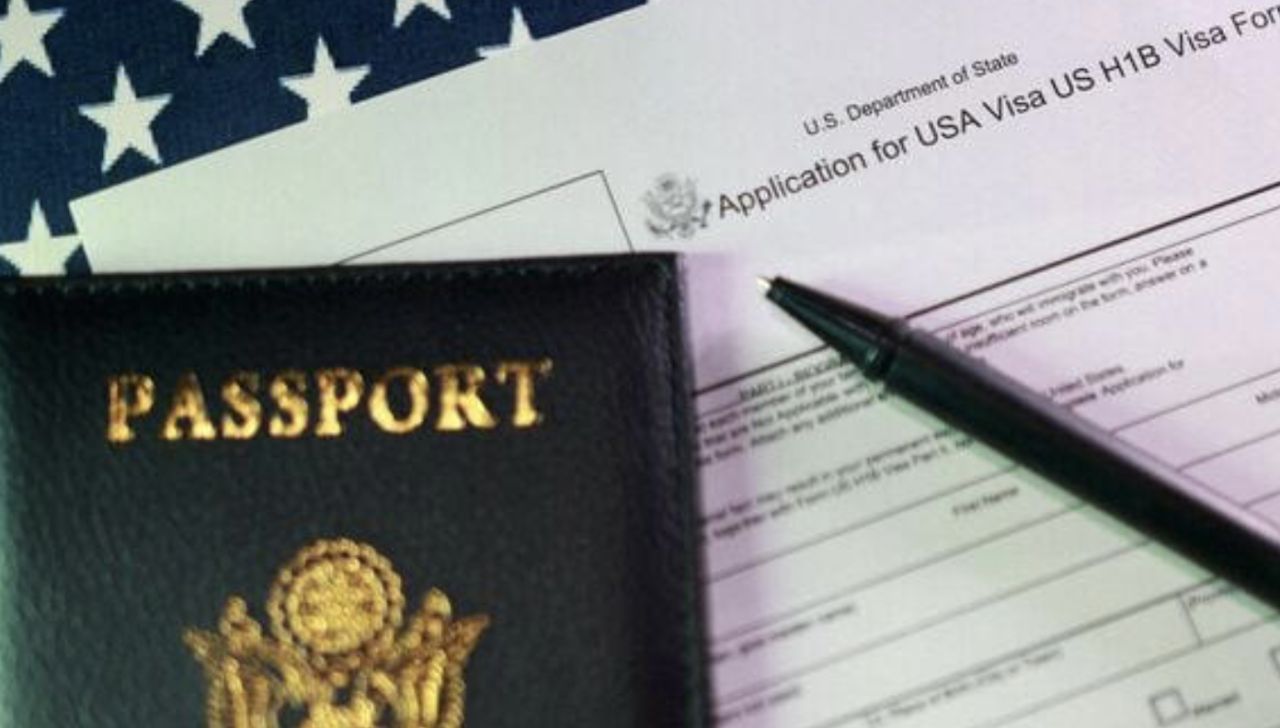
USCIS Confirms No Second H-1B Lottery for FY2027 After Visa Cap Reached
The U.S. government has officially filled all available H-1B visa spots for Fiscal Year 2027, meaning there will not be a second H-1B lottery this year.
The U.S. Citizenship and Immigration Services (USCIS) announced that it received enough approved petitions to meet the annual cap of 85,000 H-1B visas. Employers whose registrations were selected in the first round had until June 30, 2026, to submit complete petitions. Workers approved under this year's cap can begin their jobs in the U.S. starting October 1, 2026, the first day of FY2027.
FY2027 Introduced a Big Change
One of the biggest updates this year was the way H-1B candidates were selected.
Instead of relying only on a random lottery, USCIS introduced a weighted selection system that gives higher priority to job offers with stronger salaries.
Under this new approach, applications linked to higher wages had a better chance of being picked based on the Department of Labor's four-level Occupational Employment and Wage Statistics (OEWS) prevailing wage system.
Key Highlights from USCIS
- 71.5% of selected foreign workers held a U.S. advanced degree, up from 57% in FY2026.
- Only 17.7% of selected registrations came from the lowest wage category (OEWS Level 1).
- USCIS has not yet released the complete FY2027 selection statistics, including the final selection rate. More details are expected in the coming days or weeks.
Fewer Applications Than Last Year
Earlier, in May 2026, USCIS reported receiving 211,600 valid H-1B registrations for FY2027. That's a 38.5% drop compared to the 343,981 registrations submitted for FY2026.
Despite the decline in registrations, the agency still received enough qualified petitions to reach the annual visa limit without holding another lottery round.
What Is the H-1B Visa?
The H-1B visa was created under the Immigration Act of 1990 to help U.S. employers hire skilled foreign professionals when qualified workers are difficult to find locally.
To qualify, applicants generally need a bachelor's degree or an equivalent qualification in a specialized field. The visa is typically granted for three years and can be extended for another three years.
According to estimates from economist Stephen Brown of Capital Economics, the United States is home to roughly 700,000 H-1B visa holders, along with around 500,000 dependents.
Which Industries Use H-1B Workers?
Technology continues to dominate H-1B hiring. According to the Pew Research Center, at least 60% of H-1B approvals since 2012 have been for computer-related occupations.
However, the program is also widely used by:
- Hospitals
- Universities
- Banks
- Research organizations
- Other employers that require specialized talent
Annual H-1B Visa Limit
Each year, the U.S. issues 65,000 regular H-1B visas, plus an additional 20,000 visas for applicants who have earned a U.S. master's degree or higher.
While these visas are generally awarded through the H-1B selection process, certain employers—including universities and qualifying nonprofit organizations—are exempt from the annual cap.
Login