
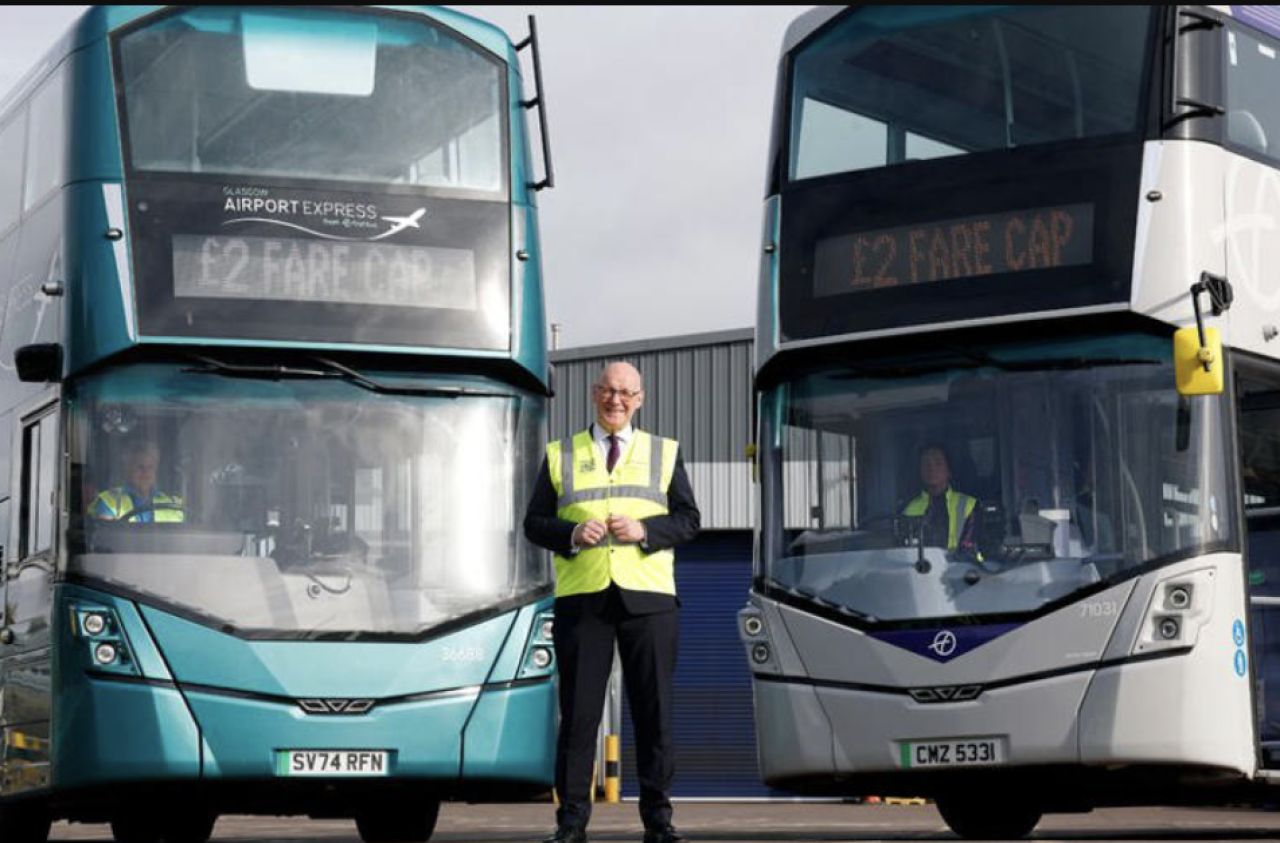
Bus passengers in rural West Stirling are questioning why they are still paying much higher fares while nearby communities benefit from Scotland’s new £2 bus fare cap.
The fare cap has recently been expanded to the Strathclyde region as part of the Scottish Government’s public transport plans. However, the policy has not yet reached the Stirling area, leaving residents in places such as Strathblane, Killearn and Blanefield facing fares of up to £12 for some journeys.
The issue has now been raised by Stirling and Strathallan MP Chris Kane, who has written to Transport Secretary Stephen Flynn asking for the scheme to be extended to his constituents.
Kane said the difference is especially noticeable in rural West Stirling, where some communities are only a few miles from the Strathclyde boundary.
For local residents, the concern is simple:
- Some short journeys can cost around £12 return.
- Many residents depend on buses because they do not have access to a car.
- Workers, students and people attending medical appointments rely on these services every day.
- Nearby passengers can already benefit from the £2 fare cap.
One example highlighted by Kane is the trip from Strathblane to Milngavie. The journey can cost around £12 for a return ticket, despite taking roughly 10 minutes.
He argued that the current system has created what he described as a “postcode lottery” for public transport, with passengers living close to each other facing very different fares simply because they fall under different transport regions.
Strathblane Community Council also said some residents have expressed significant frustration about the situation. The concern appears particularly strong among younger workers who are not eligible for certain concessionary travel schemes but still depend heavily on buses to commute.
The Scottish Government says it plans to expand the £2 bus fare pilot further. Responding to a question at Holyrood, Transport Secretary Stephen Flynn said the scheme began in the Highlands and Islands before being expanded to the SPT area, describing the move as an important step toward a potential nationwide system.
The government has said it will provide Parliament with details about the timing of any further expansion.
Meanwhile, Kane says he will continue pressing ministers to include West Stirlingshire.
For many people in the area, he said, buses are not simply a convenience—they are essential for getting to work, education, healthcare and other vital services. He believes communities with the fewest transportation options should not be left paying some of the highest fares.
Login